Scientific and Framework History
BAT Levels Timeline: From Alzheimer’s Biomarkers to the BATWatch Framework
Understanding modern brain biomarker monitoring requires looking at the discoveries that made it possible.
For more than a century, researchers have studied the biological signals associated with Alzheimer's disease and related neurodegenerative processes. Advances in pathology, molecular biology, and biomarker measurement gradually changed how scientists observe brain health long before symptoms appear.
The timeline below highlights key milestones in that scientific progression - from the earliest pathological descriptions of Alzheimer's disease to plasma biomarkers and longitudinal monitoring approaches.
It also shows how BATWatch organized existing literature into a terminology and monitoring framework designed to support clearer discussion of biomarker trends over time.
Each milestone connects to source material that forms part of the BATWatch Evidence Matrix.
Era 1: Scientific Discovery (1906-2010)
-
1906
First Alzheimer pathology case is documented
Alois Alzheimer described progressive cognitive decline with plaque and tangle pathology, creating the disease-model context later used in biomarker research.
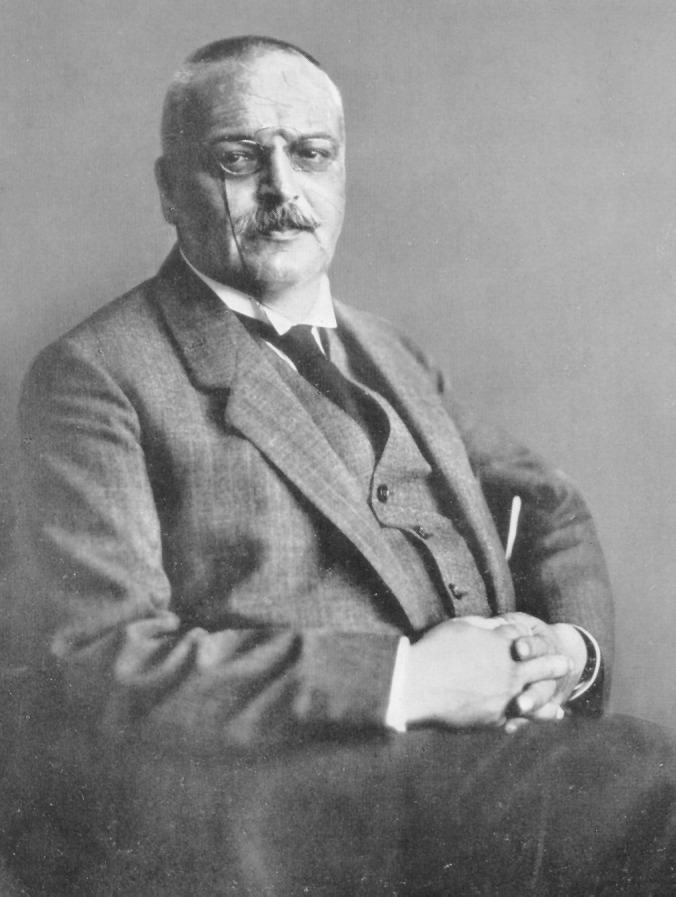
Figure: Alois Alzheimer, whose 1906 case description first documented the plaque and tangle pathology associated with Alzheimer's disease. Reference: Hippius H, Neundorfer G, Dialogues in Clinical Neuroscience, 2003 (PMID: 22034141)
-
1984
Beta-amyloid plaque core protein is characterized
Biochemical isolation of beta-amyloid from plaque material established a measurable molecular target for future assay development.
Reference: Glenner GG, Wong CW, Biochemical and Biophysical Research Communications, 1984 (DOI: 10.1016/S0006-291X(84)80190-4)
-
1995
CSF tau staging becomes a biomarker milestone
CSF tau findings strengthened evidence that tau can be measured as a biological signal, supporting later multi-marker panel models.
Reference: Blennow K et al., European Archives of Psychiatry and Clinical Neuroscience, 1995 (DOI: 10.1007/BF02815140)
-
2001-2005
Aβ42/40, tau panels, and amyloid PET advance in parallel
Clinical assay refinement and early amyloid PET studies improved in vivo and fluid-based signal interpretation, making longitudinal biomarker comparisons more practical.
Reference: Blennow K et al., Molecular Neurobiology, 2001 (DOI: 10.1385/MN:24:1-3:087)
-
2006-2010
Multicenter standardization improves comparability
Cross-site biomarker protocol work reduced interpretation variability and supported broader use of biomarker frameworks in research and translational settings.
Reference: De Meyer G et al., Archives of Neurology, 2010 (DOI: 10.1001/archneurol.2010.179)
Era 2: Biomarker Translation Era (2011-2020)
-
2011-2015
Preclinical biomarker frameworks are formalized
Research criteria and framework papers integrated amyloid and tau biomarkers into staged models, linking molecular patterns with earlier monitoring windows.

Figure: Reisa Sperling, whose work helped establish biomarker-based staging frameworks for preclinical Alzheimer's disease. Reference: Sperling RA et al., Neuron, 2011 (PMID: 21514248)
-
2016-2020
Plasma assays become clinically usable at scale
Ultra-sensitive blood assays for Aβ42/40 and pTau advanced across multicenter cohorts, supporting noninvasive, repeatable measurement for trend-based follow-up.
Reference: Schindler SE et al., Neurology, 2019 (DOI: 10.1212/WNL.0000000000008081)
Era 3: BATWatch Framework Era (2021-Present)
-
2022
BAT terminology framework is introduced
BAT Levels, BAT Testing, and BATWatch terminology were organized into a consistent language layer used for education, reporting, and cross-page knowledge mapping.
Reference: BATWatch terminology glossary context, BatLevels.org, 2026 (Glossary and term definitions)
-
2023
BAT Testing workflow is documented as assay-agnostic monitoring
The framework was structured around repeat blood measurement and trend interpretation rather than reliance on any single vendor assay.
Reference: BAT Testing framework documentation, BatLevels.org, 2026 (BAT Testing article cluster)
-
2024
BATCheck and BATScore reporting layers are standardized
Snapshot and Complete pathways were formalized to support provider-guided interpretation of longitudinal biomarker context with consistent report structure.
Reference: BATCheck reporting framework context, BatLevels.org, 2026 (BATCheck article cluster)
-
2025
Observational registry and education layers are expanded
BATWatch registry documentation and TeamBrain educational pathways were used to support observational trend learning and public-facing normalization of repeat monitoring language.
Reference: BATWatch registry and education context, BatLevels.org, 2026 (BATWatch registry context)
-
Present Day
Longitudinal biomarker monitoring continues to evolve
Plasma assays, interpretation frameworks, and observational registries continue expanding the ability to study brain health trends across populations over time.
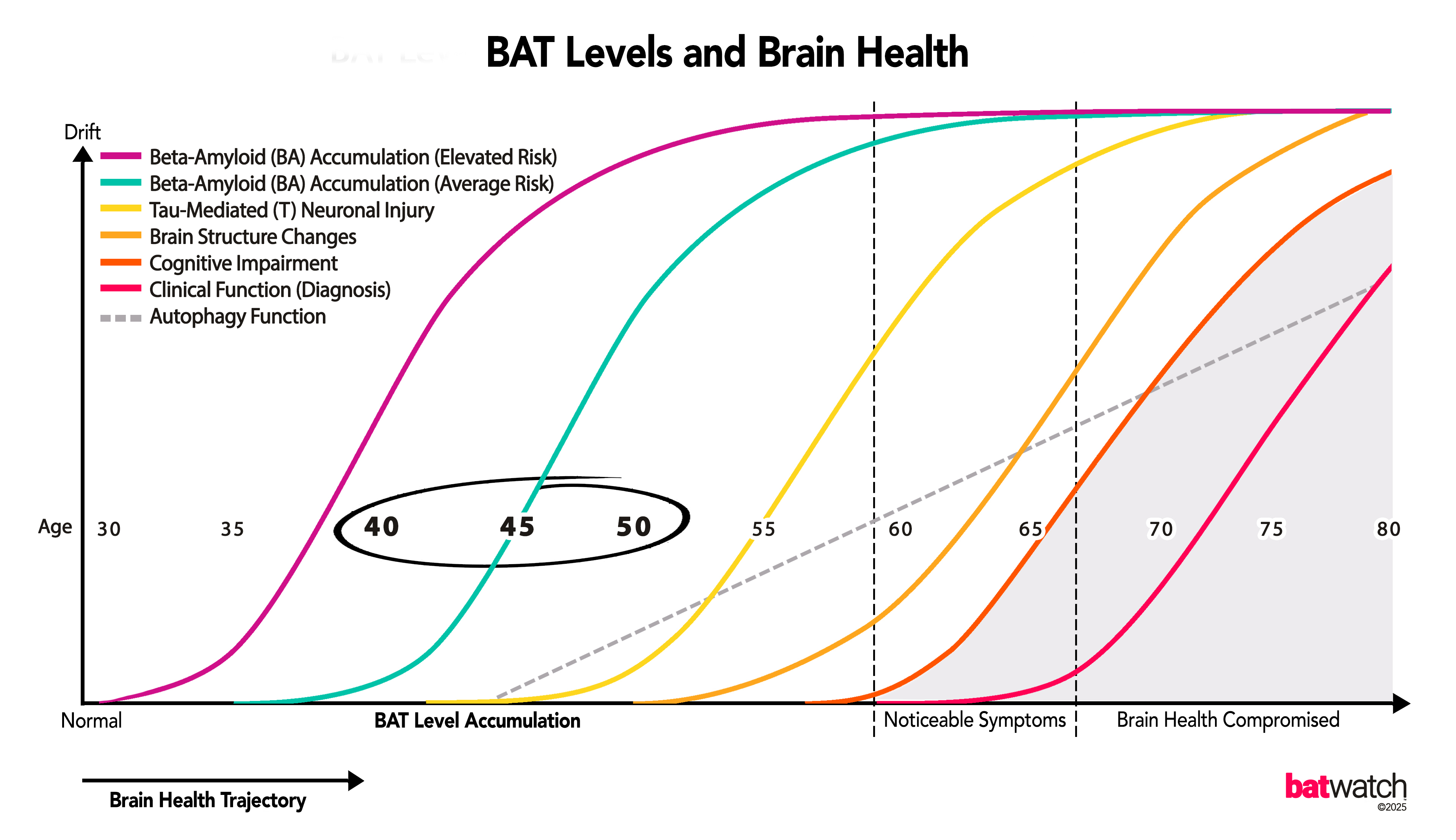
Illustrative longitudinal biomarker progression model used in BATWatch terminology discussions for describing biological trend development over time. Reference: BAT Testing Matrix and research index context, BatLevels.org, 2026 (BAT Testing Matrix)